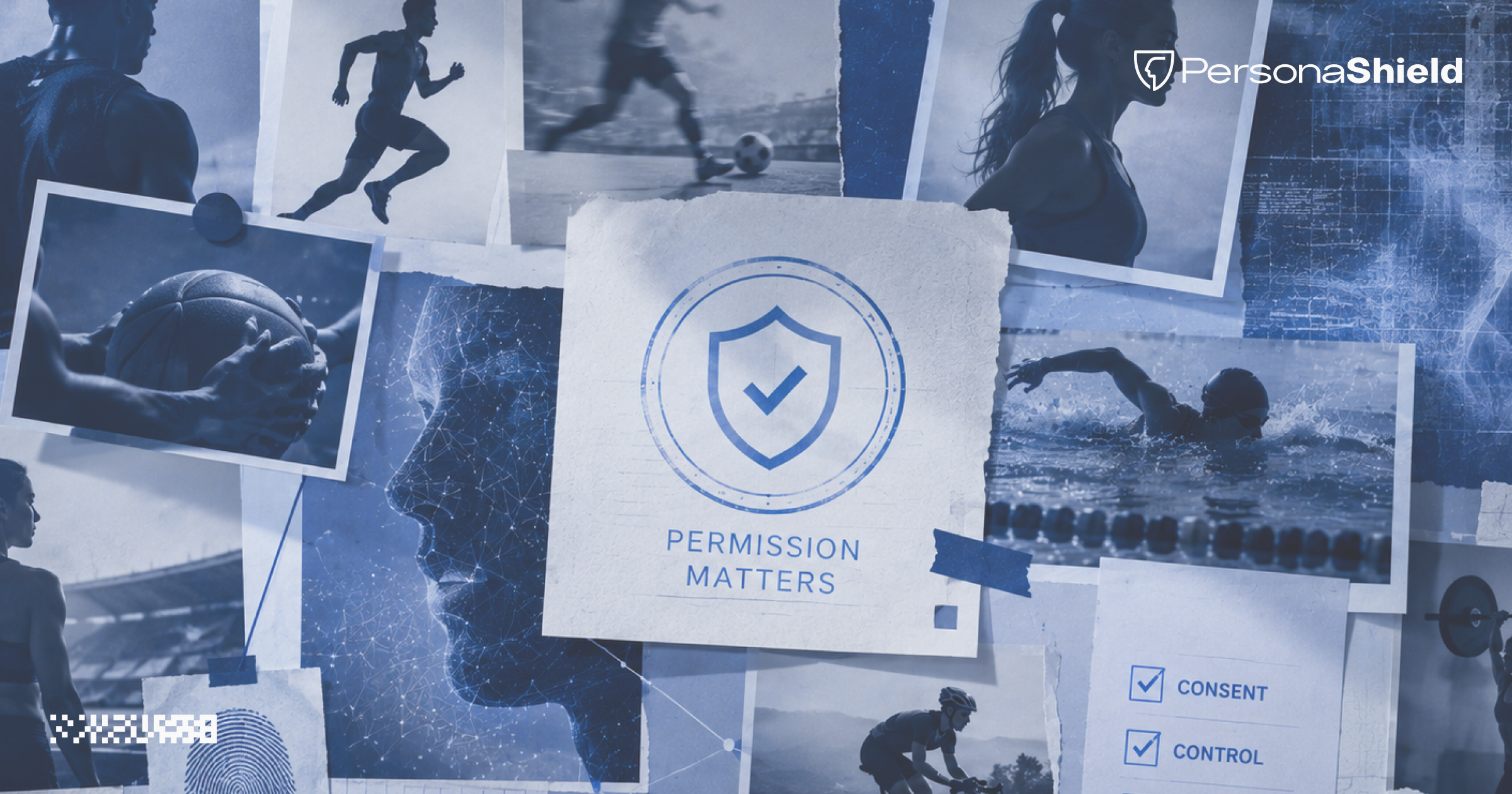
AI can now build a convincing image of almost anyone from a few words of description. When that image is made from a real person's appearance, it is AI generation using their likeness, and it has become one of the most common things happening online. Some of it is playful, some of it is useful, and a lot of it involves creators whose faces people already know.
The question used to be whether this should happen at all. That debate is mostly over, because the images are already being made every day. What matters now is whether the creator has a part in how their likeness gets used, and whether that use starts with their permission.
Understanding AI Generation Using a Creator's Likeness
AI generation using a creator's likeness is any AI-made image built on a real person's appearance. Someone describes what they want and a model produces a picture shaped around how that person actually looks. The result can be a stylized portrait, a realistic scene, or an edit that places the creator somewhere they have never been. People often call the output an AI-generated likeness, and the tools that make it are ordinary AI image generators.
The most common everyday version involves fans. Fans have always made things about the creators they follow, from fan art to edits to tributes, and AI-powered fan creation is that instinct running through an image generator. A fan can now produce a polished picture of a favorite creator in seconds, where a hand-drawn tribute once took a full weekend and real skill. In the week OpenAI opened image generation inside ChatGPT to everyone, users made more than 700 million images in seven days, which is the kind of volume that turned AI generation of real people into a regular part of online life.
Why Creator Permission Matters for AI Generation
Once AI can generate a likeness on demand, permission is what decides whether that power works for the creator or around them. It matters because a likeness is more than a picture.
1. A likeness carries reputation, not just an image
A creator's likeness is not a blank asset that belongs to whoever can generate it. It carries their reputation, their relationship with an audience, and the work they put in to build both. When an AI-generated image goes out with their face on it, people read it as coming from them whether they approved it or not. That is why permission is not an abstract concern. It is the line between a fan celebrating someone and a stranger speaking for them. The clearest way to see that line is to look at the moments it gets crossed.
2. What happens when nobody asks
When a platform treats permission as something people have to chase after the fact, the gap shows up fast. In July 2026, Meta rolled out an AI image generator called Muse Image inside Instagram that let anyone generate images from a public account's photos by tagging that username in a prompt. Every public account was opted in by default, with no notification and no consent step, so a creator could have images made from their likeness and never know it happened. After days of criticism, Meta pulled the feature, saying it had "missed the mark."
It also catches individual creators, in quieter ways. In May 2026, the model Francheska Pujols sued a retailer after it used AI to alter her images into poses she never agreed to and ran them in ads once her contract had ended, which she said damaged the reputation she had built. In both cases the issue was not that AI made the image. It was that nobody asked first. Permission is what closes that gap, and it does more than head off trouble.
3. Consent makes the creator a participant
With consent built into the process from the start, a creator is not stuck reacting to things after they show up. They can decide up front what they are comfortable with, take part in the generation their fans are already doing, and benefit from it instead of watching it happen around them. Consent turns the creator from a bystander into a participant. Permission does not only change things for the creator, though.
4. Why permission helps fans, too
The people making images gain from it just as much. When a creator sets safeguards, fans get something they usually lack, which is certainty. They know a piece they make is welcome instead of wondering whether they crossed a line, and that certainty builds trust in both directions. Fans trust that they are creating in good faith, and the creator trusts that what carries their likeness reflects them. Being open about the terms carries it the rest of the way. When everyone can see what is allowed, a fan community shares a common understanding instead of a set of private guesses, the arguments about what counts as fair tend to fade, and the energy goes back into making things.
How Permission-Based AI Generation Works
Permission-based AI generation follows a simple shape, and it does not depend on any one company's product. It has three parts, and the order they happen in is the whole point. The creator moves first.
1. Step one, the creator opts in
Nothing happens with a creator's likeness until they choose to take part. Opting in is an active decision rather than a default that someone else sets for them, which means the starting position is off until the creator turns it on. Once they are in, the next move is theirs to make.
2. Step two, the creator sets the boundaries
They define what kind of generation is welcome and what is off limits. That might mean waving through fan portraits, celebratory edits, or images built around a running joke the community loves, while ruling out categories like alcohol, weapons, adult content, political endorsements, brand deals they never agreed to, and false or misleading claims. What happens if someone ignores those lines is a separate question about enforcement, which we cover in protecting a creator's likeness from AI. The boundaries themselves are specific to the creator, because what feels right for one person can feel wrong for another, and they can be adjusted as a brand grows or a community shifts.
3. Step three, fans create within those boundaries
With those boundaries set, fans have a clear space to make things, and the same holds for any authorized creation. They know what is allowed, the creator knows what is going out, and the generation stays inside lines the creator drew. Permission comes first, and everything a fan makes follows from what the creator already agreed to.
Why More Creators Want Permission Built In
This is not only a creator-economy story. Across entertainment, sports, and brand work, the same move toward permission is happening at once, and it is easiest to see one field at a time.
In music
Major labels have shifted from fighting AI tools to licensing them on their own terms. Universal reached a deal with an AI music company to build an authorized service, and it described that service as strictly opt-in for talent, meaning artists can decline to be included at all. Warner followed with its own partnership on licensed AI music, built around artists choosing in rather than being swept in by default. It is showing up on the field, too.
In sports
Athletes are setting terms before the technology reaches fans rather than after. In February 2026, the Major League Baseball players' association reached a deal to let fans interact with AI versions of players, structured so the players opted in and shared in the upside. What stood out was the timing, since the players agreed the terms before the technology was fully out instead of arguing about them once it was already loose. From there it reaches past talent into the companies that work with them.
In brand work
For brands and the creators who work with them, permission is becoming a practical requirement rather than a nice-to-have. An image that appears to show a creator endorsing a product carries real commercial weight, and both the creator and the brand have reasons to want that use authorized and on record.
The pattern holds across all of them. The industry is moving from unrestricted generation toward generation that starts with a yes. This is what people increasingly mean by creator AI rights, which is the idea that a creator should have standing in how AI uses their likeness. Some of that is being written into law, and we cover the biggest example in what the NO FAKES Act means for creators.
The Future of AI Generation Starts With Creator Choice
AI generation using a creator's likeness is not going to slow down, and treating it as a problem to stamp out misreads the moment, because the creativity behind it is mostly real and well meant. The opportunity is to build systems where the creator helps decide how it happens. They choose whether to be involved and what is welcome, and fans get a clear and official way to make what they were already making.
You can already glimpse how good this gets when a creator is on board. Erling Haaland, the Norwegian striker, has leaned into the fan-made AI memes built around him, and during the 2026 World Cup he even told his followers to search his own name for the joke on the results page. Right now that is closer to a happy accident than a system, since he cannot choose which get made. Build permission in and that upside becomes something a creator can count on rather than hope for.
The path forward is not a choice between two extremes. It gives creators a real say in how their likeness is used while leaving fans room to keep creating, and the two reinforce each other.