Two years ago, a political deepfake meant an anonymous account posting something misleading the night before a vote. The worry was that nobody would know where it came from.
Some of that has changed. Campaigns now make this content under their own names, and 31 states require a label on it, so a piece of what is running arrives with a disclosure and a party attached.
Most of it does not. Those rules apply to political advertising, which leaves out anything posted as an ordinary post by an outside group, an anonymous operator, or an account that is not a real person at all. That is where the volume is. Researchers tracking this cycle have found hundreds of AI-generated accounts pushing political content with no disclosure of any kind, some of them built around images of real public figures.
What runs through all of it is the same thing. Somebody's face is doing the work, and nobody asked them first.
Why Political Deepfakes Hit Differently During an Election
Anyone with a public face has been dealing with AI content for a while. Fake ads, cloned voices, images of yourself somewhere you have never been, mostly handled one report at a time.
An election changes three things about that, and they compound.
1. Political content comes with a media buy
A scam ad hopes for reach. A political ad buys it, with targeting attached. A fake is not drifting toward whoever happens to see it, it is being pushed at the specific people most likely to react, selected using the same voter data the campaign uses for everything else.
2. It has a deadline
A fake product endorsement is a problem whenever it appears, and you have as long as you need to sort it out. Political content is aimed at a fixed date. Correcting it in September is worth something, correcting it in November is worth almost nothing, and whoever made it knows that.
3. It looks like everything else in the feed
Nobody scrolls past a political ad in an election year wondering why it exists. The format is expected, the tone is expected, and the volume is high enough that one more does not stand apart. That removes the signal that usually makes someone look twice.
Those pressures act on everyone making this content. The difference is who is making it.
How AI Deepfakes Are Showing Up in 2026 Campaign Ads
Campaigns making AI video of their opponents is the part that gets covered, and it is real.
The clearest example is New York's 21st district, the race to replace Elise Stefanik. Last year, Democratic candidate Blake Gendebien's campaign made an AI video attacking Stefanik, which his campaign calls parody. This August his Republican opponent Anthony Constantino posted a video showing Gendebien saying things he never said, and said he made it because of the first one. A political science professor at SUNY Plattsburgh told WCAX the ad met New York's requirements, because Constantino labeled it as AI at the top of the video.
Both campaigns used it, each blames the other, and the law is satisfied. Once one campaign in a race shows an AI video works and costs nothing, everyone else in that race has a reason to make one.
But a campaign has a name on it, a filing history, and a reason to stay inside the rules. Most of what is circulating has none of that, and it is made by people the candidate has never heard of.
Political Deepfakes Don't Only Affect Candidates
Anyone with a recognizable face and an audience can be pulled into political content. The further you sit from the race, the less anyone owes you an answer.
1. Public figures placed in scenes they were never in
In Kentucky's 4th district primary, an ad attacking Representative Thomas Massie used AI video of Representatives Alexandria Ocasio-Cortez and Ilhan Omar with him, showing the three of them dining together, holding hands, and checking into a hotel. It carried a disclaimer saying it was satire made with AI.
Neither congresswoman was running in that race, in that state, or in that party's primary. Massie lost and said the ad contributed to it. Whatever that ad did to the race, the two women in it had no part in any of it.
2. Fake accounts built around real people's faces
The larger version of this is not an ad at all.
An Instagram account for "Jessica Foster" ran from December 2025 to March 2026 and reached over a million followers before it came down. The woman did not exist. The persona was AI and so were the images, including ones placing her beside President Trump, and the account linked out to a subscription page. Researchers keep finding that shape, where the politics builds the audience and the audience gets sold something.
Foster was not unusual. The New York Times tracked at least 304 AI-generated accounts posting political content on TikTok alone since January, and Purdue's GRAIL lab found more across TikTok, Instagram, and Facebook. Most of what has been documented leans the same direction, though the method belongs to no party. It takes one person, a generator, and an afternoon.
There is no campaign to call about any of it. No filing to check, and usually no way to find out who is behind it.
3. People who were never in politics at all
The hardest version ran in Hawai'i this month.
A congressional campaign ad featured a woman who appeared to be Haunani-Kay Trask, the Native Hawaiian activist, endorsing the candidate. Trask died in 2021. Her sister Mililani says the position in the ad is one Haunani-Kay spent her life opposing.
Mililani called the campaign. She was told it was not their concern. She called the state Office of Elections and was told there was nothing they could do. The candidate said the woman in the ad is an actress, and that he did not know who Trask was.
The family asked, the ad kept running, and the cycle moved on. Which raises the question of who was supposed to catch it.
Why Social Platforms Are Part of the Problem
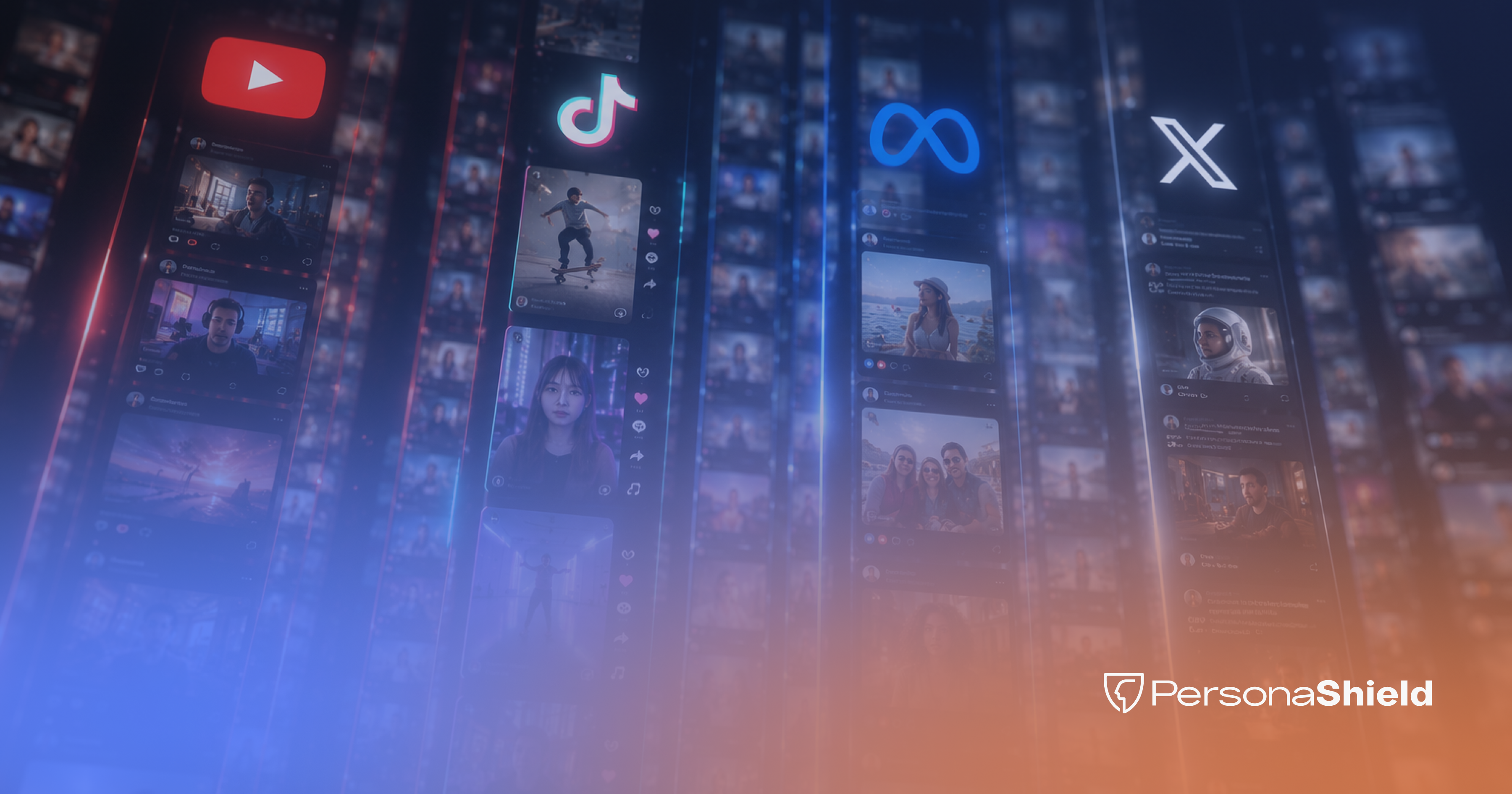
Campaigns are the visible part. Distribution decides how far any of it goes, and distribution runs through a handful of companies.
Daniel Kreiss, who studies political communication at the University of North Carolina, told KQED that AI made this content cheaper to produce and cheaper to aim at particular groups of voters. Bad actors, as he put it, "can do a lot more with a lot less."
1. The rules only reach advertising
Meta has published a plan for the midterms. Political and social issue advertisers have to get authorized and carry a "paid for by" disclosure. Beyond that:
- Those ads go into the public Ad Library
- AI disclosure is required for certain political ads
- "AI info" labels get applied when detection picks up technical signals New political ads are blocked in the final week
TikTok bans paid political advertising outright, which removes the highest-risk paid category from the platform.
That is more infrastructure than existed in 2024, and it is worth saying before saying what it misses. What it misses is everything that is not an ad. A fake persona posting organically is not buying anything, so none of the advertiser rules reach it.
2. Where the rules do apply, detection misses
In August, 18 House Democrats wrote to Meta about its rollback of election safeguards, a concern that has not split along party lines. Two things around that letter say more than it does.
Meta shipped an AI tool that generated content from people's likenesses without asking them, then pulled the feature shortly after launch. And the day after the letter went out, WIRED reported that Meta had approved ads for an app promising to make explicit deepfakes of female politicians. Apple pulled the app within hours of being asked about it.
Neither was a missing rule. Both companies had policies covering that behavior, and both times the fix came after a reporter or a lawmaker went looking. The accounts run the same way. Foster lasted three months, and "Emily Hart," a fake influencer named in that same letter, lasted longer still.
That distance between what the platforms say they do and what they catch is the number to plan around when your face is the material.
Platform policy is one layer, and the law underneath it is thinner than most people assume.
What State Deepfake Laws Actually Cover
There are election deepfake laws in 31 states. Minnesota and Texas ban political deepfakes inside a window before an election, Maryland bans deceptive ones year-round, and the rest require a disclosure. Three things in there matter if you are not running for office.
1. The candidate is usually the only one who can act
In most of these statutes, the person who can seek an injunction or damages is the candidate, and sometimes an election official or the state. Only a handful name whoever is depicted. Appear in political content without being on the ballot and the statute frequently has no role for you in it.
That is not an oversight. These laws were written to protect elections from deception, not to protect people from having their likeness used, and those two goals only overlap part of the time.
2. Most of them are written around campaign material
Disclosure requirements attach to electioneering communications, political advertising, and material distributed by campaigns and committees. An anonymous account posting AI images of a real person is not buying an ad or filing anything, which puts a large share of what is circulating outside the frame these laws were built for.
3. A label usually settles the rest
Constantino's ad was legal because he disclosed it. Satire and parody are commonly exempt on top of that, which is how the Kentucky ad was labeled.
Courts have narrowed things further. California's law was struck down on First Amendment grounds in Kohls v. Bonta, and Hawai'i's was enjoined for similar reasons. Federal law is still unsettled, and a national likeness right would change this more than any state disclosure rule.
So nothing reliably stops it and nothing reliably gives you standing. What is left is what it costs you.
What a Fake Political Association Does to a Reputation
Say it gets debunked, which is the outcome everyone treats as the fix. The impression it left does not come down with it, and political content leaves a particular kind.
- People come away associating you with a position you never took, and they do not remember where they picked it up.
- Followers who believed it feel misled, and some carry a small doubt into everything that comes after.
- Partners start asking about a political association that was never in any agreement, because nobody wrote a clause for this.
- A correction reaches the people already paying attention, which is a much smaller crowd than the one the algorithm handed the content to.
There is also no version of this where staying quiet is neutral. Declining to comment reads as confirmation to some people and denial to others, and both readings travel. It is the same reason likeness protection tends to matter most to people whose income depends on being trusted.
The Election Is Exposing a Bigger Likeness Problem
November comes and goes. The tooling does not, and neither does what people learned using it this year. Whatever works in October gets reused next cycle, and in the meantime by everyone who watched it work.
The election is not creating this problem. It is running an existing one louder, which makes the missing parts easier to see. AI can produce the appearance of political participation without the participation, and the person depicted has no reliable way to object beforehand or be heard afterward.
Two changes would move that. A federal likeness right would give the person depicted standing rather than only the candidate. And likeness matching at the point of posting would catch something before an audience does. Neither is close.
So the decision sits with the person whose face it is. Political endorsements are one of the categories you can rule out in your PersonaShield safeguards, along with any other use you do not want your likeness attached to. The same rules decide what fans can officially create, with you earning from those images.
Voters need to be able to tell what is real, and that problem has people working on it. The person in the picture needs a say in whether their face gets attached to a position at all. That one is still mostly unclaimed.